Se habla español.
Interpreters available for other languages.
The ROAR Center is a recognized Center at the University of Maryland, Baltimore


Se habla español.
Interpreters available for other languages.
When ROAR first opened its doors in 2019 to assist survivors of violence in Baltimore City, there were few resources for those directly impacted by gun violence, except the hospitals to administer life-saving care, the police and prosecutors, and a few neighborhood-based organizations operating valiantly with little or no funding.
In large part due to the influx of referrals we started getting from the then-small number of violence interventionists at Shock Trauma and Johns Hopkins Hospital, combined with the damage to all systems due to Covid-19, ROAR quickly became overwhelmed with the number of survivors of homicide and non-fatal shootings needing assistance, and little was available.
I remember meeting with Mayor Scott in 2019, when he was City Council President, and imploring him to find resources to invest in these survivors – not only because it was needed to repair the harm caused by gun violence, but because doing so is a critical component in reducing the rates of violence. I told him that survivor support is an essential part of any public safety plan. He smiled a little bit and promised that he understood and would do all he could to meet that request.
I did not know then how deeply he intended to invest in supporting survivors and other components of a public health approach to gun violence until the Mayor’s Office on Neighborhood Safety & Engagement (MONSE) was launched and he released his Baltimore City Comprehensive Violence Prevention Plan in 2021. MONSE immediately became a steadfast partner of ROAR’s in our efforts to provide legal, nurse care management, case management, and therapy services to survivors of violence in Baltimore City.
The numbers are clear. The Mayor’s plan and his commitment to implement all its components, including survivor support, have yielded results that many considered impossible, with Baltimore recording the lowest homicide rate in nearly 50 years in 2025.
The city’s cooperation and collaboration between government, law enforcement, and community organizations now serves as a model for the country. But even one life lost is still one too many.
We cannot rest on the laurels of these historic lows. There is still much more work to do, which will become increasingly difficult due to federal funding cuts that directly affect CVI and other community service organizations.
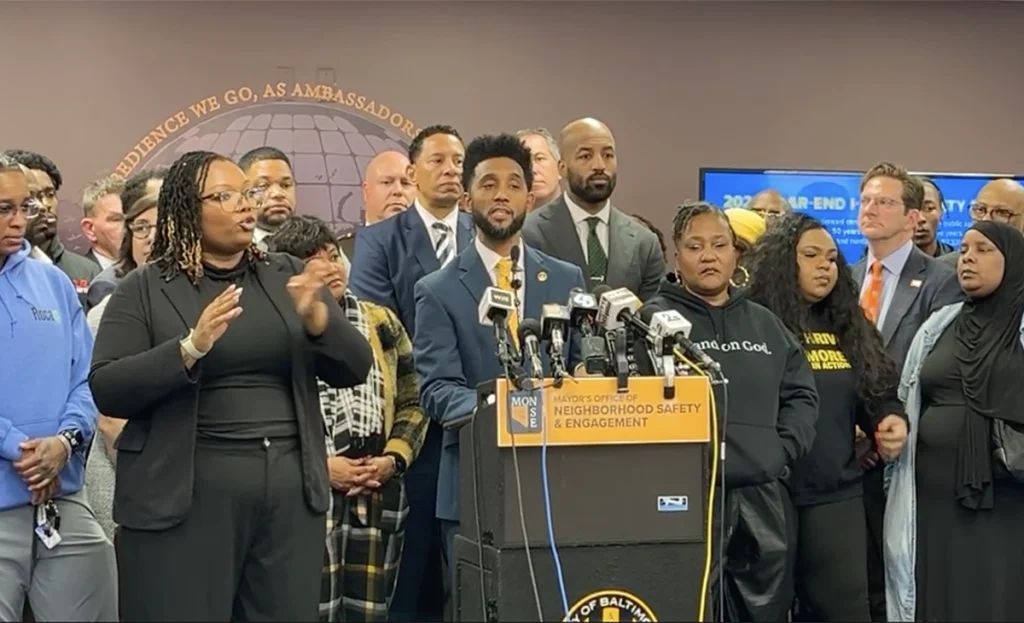
Watch Mayor Brandon Scott’s press conference, at which elected officials, community partners, and law enforcement representatives celebrated the historic progress we’ve made on gun violence in Baltimore to date, and described what is needed to build on that progress moving forward.